

We all know that curly hair comes in a wide variety of textures, broadly categorized into Kinky (tightly coiled or zigzag patterns), Coily (spiral curls), and Curly (defined curls) textures. Have you ever wondered what exactly distinguishes these three types? Although they may look similar at first glance, they are actually quite different, each possessing unique characteristics and properties.
Understanding these differences helps you identify the styling and care routines that truly suit you—especially when shopping for virgin hair extensions designed to blend seamlessly with your natural hair. These textures vary significantly in structure, curl pattern, and maintenance needs; knowing this enables you to make smarter choices in your daily hair care.
This guide explores the distinctions and characteristics of Curly, Kinky, and Coily hair, helping you confidently recognize and embrace your natural hair texture.
What is curly hair?
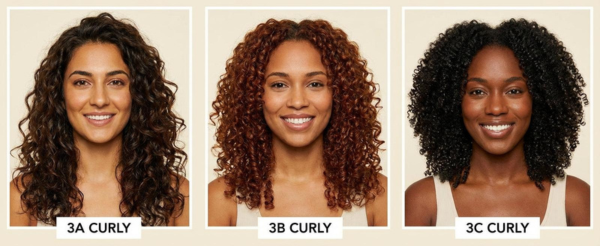
Curly hair is typically classified as Type 3 and is the most distinctive hair type. It features a springy, spiral texture with clearly defined "S"-shaped coils. Like other hair types, it comes in various forms, ranging from loose waves to well-defined ringlets (spanning types 3A through 3C).
Among these, the 3A (loose, large curls) and 3B (medium-sized, springy ringlets) subcategories are the most popular. Its versatile structure makes it easy to create a wide range of hairstyles.
The Key Characteristics of Curly Hair
Curl Pattern
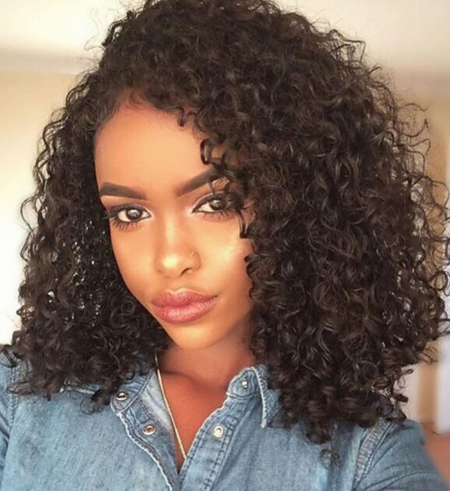
The curls form an S-shaped spiral, appearing larger and looser than tight coils or Afro-textured curls. They range from loose, large waves to well-defined ringlets, allowing for looks that can be either highly defined or effortlessly natural.
Texture
The hair is soft, smooth, and elastic, with moderate shrinkage (20–40%); it retains about 70% of its length when dry.
Appearance
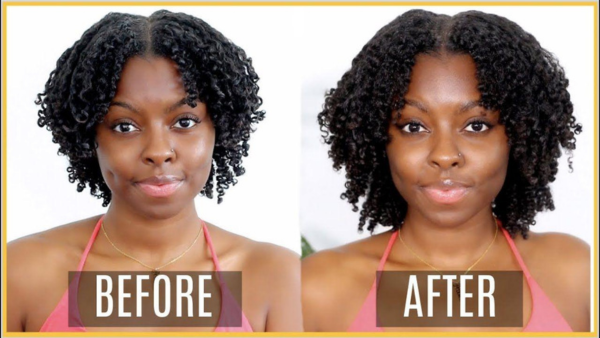
The curls are well-defined with a fluid pattern and usually possess a natural sheen. They are easier to detangle than tighter curl textures.
Volume
It typically offers natural volume and dimension, especially at the roots, due to the way the strands curve. However, the hair is also prone to breakage and damage.
Challenges
It is prone to frizz, dryness, and tangling, with frizz being particularly common in humid conditions.
Styling Needs
Lightweight moisturizing products are required to enhance curl definition without weighing the hair down (which could cause it to go flat). It is highly versatile and suitable for a wide range of styles.
What is Coily Hair?
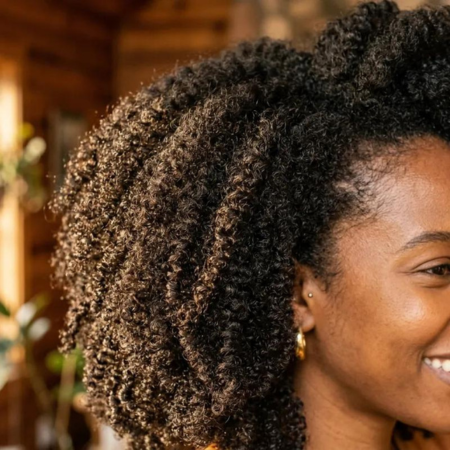
This Coily hair type is typically classified as "Type 4," characterized by tight coils or spirals that form elastic, S-shaped or O-shaped loops. It is generally dense and coarse in texture, possessing more pronounced definition than standard curly hair. The strands are tightly coiled, giving the hair its distinctive volume and texture.
It requires meticulous care, including deep conditioning, gentle detangling, and protective styling to maintain optimal moisture levels, minimize breakage, and promote overall hair health.
The Key Characteristics of Coily Hair
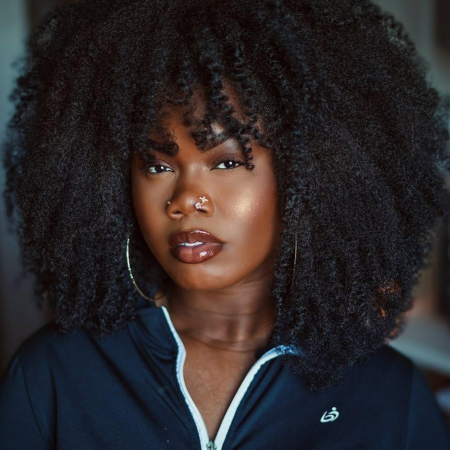
Curl Pattern
Coily hair features tight, circular, "O"-shaped spirals. The curls are typically well-defined, resembling small corkscrews or augers.
Texture
It feels soft and airy to the touch, with a texture akin to fine wire or a sponge. While very dense, its curl pattern differs significantly from standard curly hair. It is highly prone to dryness if not properly moisturized.
Density
Coily hair is extremely dense and voluminous; the tight spirals provide exceptional body and fullness. It presents a unique, "cloud-like" appearance.
Shrinkage
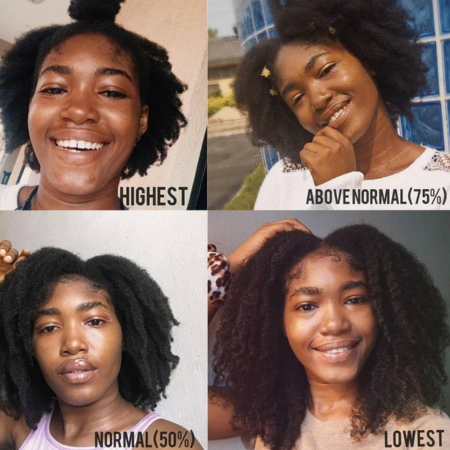
Coily hair exhibits the highest shrinkage rate of all hair types. Due to its curl structure, it can shrink by up to 50% when dry—far more than standard curly hair. This means it may appear to be only half its actual length once fully dry.
Challenges
Coily hair is quite fragile; rough handling can easily lead to breakage, and it is prone to dryness, shrinkage, and tangling. Detangling can be a time-consuming process.
Styling Needs
Protective hairstyles and regular deep conditioning are essential. This hair type looks its best when kept moisturized. Therefore, using lightweight hair oils or hair butters to lock in moisture is recommended. Water-based leave-in conditioners are also excellent options for providing extra hydration.
Styling Versatility
Coily hair lends itself to a wide range of styles, from Afros to braids, ponytails, and buns. It is also ideal for protective styling, as it holds twists and braids exceptionally well.
What is Kinky Hair?
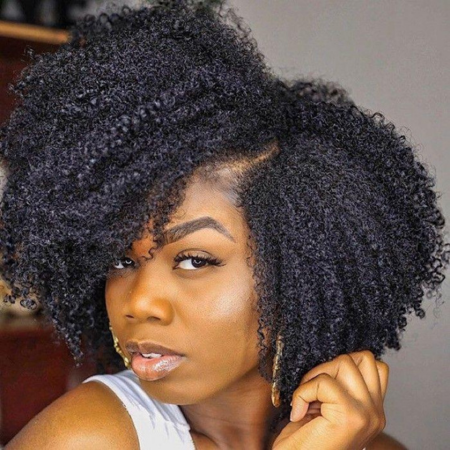
Kinky hair falls into type 4C and is very common among people of African and Afro-Caribbean descent. The strands form tight, Z-shaped spirals, characterized by a densely coiled structure. Hair thickness varies (ranging from fine and soft to coarse and wiry), and the hair requires ample moisture to look its best. Additionally, due to the high density of the curls, the hair is prone to significant shrinkage.
This hair type includes kinky straight and kinky curly, which is highly voluminous and full-bodied, though it offers less curl definition compared to "Coily" hair. "Afro" hair also features tight coils but typically appears even more voluminous and expansive, allowing for the creation of the iconic round "Afro" hairstyle.
The Key Characteristics of Kinky Hair
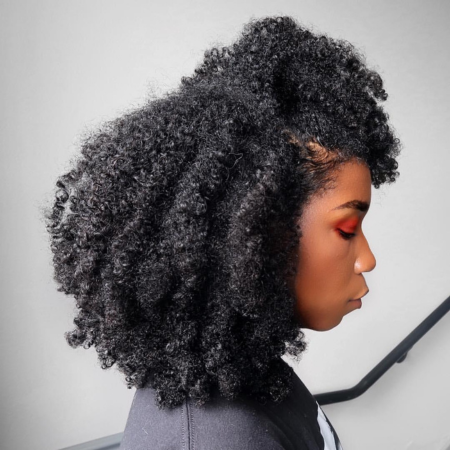
Curl Pattern
Kinky hair is a very fine, tightly coiled African hair type. It features tight, sharply angled "Z" patterns or tiny, dense spirals. The curls are extremely compact, giving the hair a full, voluminous appearance.
Texture
The texture of kinky hair typically falls somewhere between soft and coarse. It is characterized by distinct kinks and feels slightly stiff to the touch, yet possesses a spring-like elasticity.
Density
This hair type is highly voluminous and dense. Among the three main hair types, it offers the most volume—in fact, it boasts the greatest degree of fullness of any hair type. It appears very thick and naturally voluminous.
Shrinkage
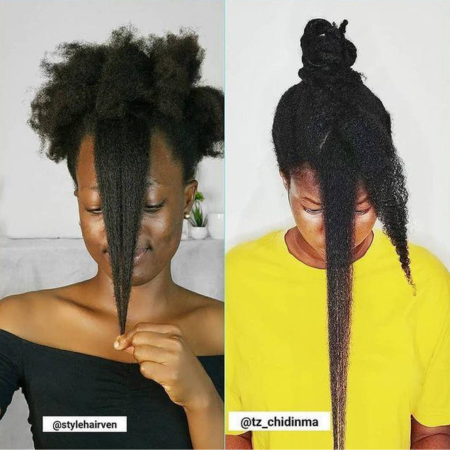
Kinky hair exhibits a very high shrinkage rate, often losing 75% to 85% of its actual length; this means a 12-inch strand might appear to be only 2 to 3 inches long when dry.
Challenges
Although kinky hair is often perceived as "tough," individual strands are actually the most fragile of all hair types. It is prone to dryness, tangling, and breakage. Without proper care, the hair becomes extremely vulnerable when dry and breaks easily.
Styling Needs
Kinky hair is naturally dry because sebum struggles to travel down the complex, sharply angled structure of the strands. Nourishing shampoos and conditioners work exceptionally well. To minimize frizz, it is recommended to seal in moisture using rich hair butters and oils, and to maintain a routine of deep conditioning.
Styling Versatility
Kinky hair offers immense styling versatility and is suitable for a wide range of looks, including braids, ponytails, and twists.
Curly vs Coily vs Kinky Hair, What's the Difference?
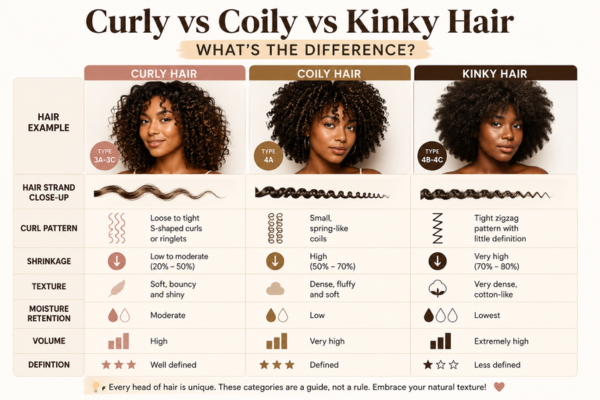
While these hair types may appear similar, each possesses its own unique aesthetic, structural characteristics, and care requirements. The better you understand your hair type, the easier it is to find the products, styling methods, and care routines that truly suit you.
The differences between Curly, Kinky Curly, and Coily hair types lie primarily in their curl patterns, textures, and overall density. Curly hair features distinct loops or spirals; kinky hair displays a tight "Z" pattern; and coily hair forms compact, spring-like coils.
The Key Difference:
| Feature | Curly Hair | Coily Hair | Kinky Hair |
| Hair Type | Type 3A-3C | Mainly Type 4A-4B | Type 4B-4C |
| Curl Pattern | Loose to tight "S" spirals/corkscrews | Tight "S" spirals mixed with miniature coils | Sharp "Z" angles & micro-spirals |
| Shrinkage | 25% – 45% | 50% – 75% | 75% – 85% |
| Curl Size | Large to medium curls | Small, defined coils | Very tight curls with less visible definition |
| Moisture Retention | Better moisture retention | Loses moisture easily | Dries out the fastest |
| Frizz | Moderate | High | High |
| Detangling Difficulty | Easy to moderate | Moderate | Most challenging |
| Breakage Risk | Moderate | High | Highest |
| Best Styling Products | Curl cream, mousse, lightweight leave-in conditioner | Rich conditioner, butter, oils | Rich butters, deep conditioners |
| Protective Styles | Loose braids, Twists, buns | Twists, braids | Cornrows, protective braids, box braids |
How To Care For The Curly, Coily and Kinky Hair?
Care Tips For Curly Hair
Moisturize Regularly: Use a lightweight leave-in conditioner.
Reduce Frizz: Apply curl cream or mousse while hair is damp.
Use Sulfate-free Shampoo: Gentle cleansing products help retain the hair's natural oils.
Use Satin Bedding: Wear a satin bonnet or use a satin pillowcase to help maintain curl definition.
Care Tips For Coily Hair
Deep Condition Weekly: Adequate moisture is essential for maintaining hair elasticity.
Seal in Moisture: Apply hair oil or hair butter after using water-based products.
Opt for Protective Styles: Styles such as braids, twists, updos, and wigs can reduce daily pulling and combing.
Detangle Carefully: Detangle using a wide-tooth comb or your fingers while the hair is damp.
Care Tips For Kinky Hair
Follow the LOC or LCO Method: Apply moisturizing products in a specific layered sequence—Liquid, Oil, and Cream (or Liquid, Cream, and Oil)—to hydrate the hair.
Avoid Excessive Heat Styling: High temperatures can permanently alter the hair's natural curl pattern.
Trim Split Ends: Regularly trimming the ends helps reduce breakage.
Opt for Protective Hairstyles: Styles such as glueless wigs, braided wigs, twists, cornrows, and sew-ins protect natural hair while promoting healthy growth.
How to Identify Your Hair Type?
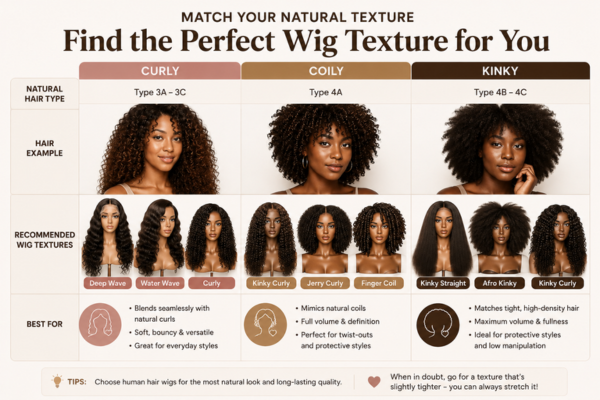
Not sure if your hair is Curly, Coily, or Kinky? Follow these simple steps:
1. Wash Your Hair
Wash away any styling products that might alter your hair's natural texture.
2. Air Dry
Avoid stretching, twisting, or blow-drying your hair.
3. Observe the Curl Pattern and Shrinkage
Curly Hair: Defined spiral curls with minimal shrinkage and high natural shine.
Coily Hair: Tight, spring-like curls with high volume and significant shrinkage.
Kinky Hair: The tightest texture, featuring a "Z" pattern and maximum shrinkage; requires the most moisture.
Conclusion
Having explored the characteristics of curly, coily, and kinky hair—including their curl patterns, elasticity, and shrinkage—you should now be able to distinguish between these different textures.
Understanding your hair type allows you to select the right products, protective styles, and human hair wigs. This helps you maintain healthy hair while embracing your natural beauty and making informed decisions about styling and care.
Whether it is loose curls, springy coils, or voluminous Afro-textured hair, each represents a stunning expression of natural hair. Do you know your hair type yet? If you have any questions, feel free to leave a comment below—let's discuss!
All Copyrights to the Images Belong to Their Respective Owners.