
Are you interested in trying out a braided hairstyle? If you are looking for a look that is elegant and sophisticated, protects your hair, and embodies a deep sense of cultural pride, then Fulani braids might be the perfect choice for you.
Making a strong comeback a few years ago, Fulani braids have remained a popular trend ever since. They are beloved by Black women for their intricate braiding craftsmanship, distinctive appearance, and relatively easy daily maintenance.
So, how much do you know about Fulani braids? In this guide, we will provide a comprehensive overview of this style—exploring its origins, unique characteristics, styling tips, and maintenance routines—and walk you through the braiding process step-by-step, helping you showcase your own unique flair.
What are Fulani Braids?
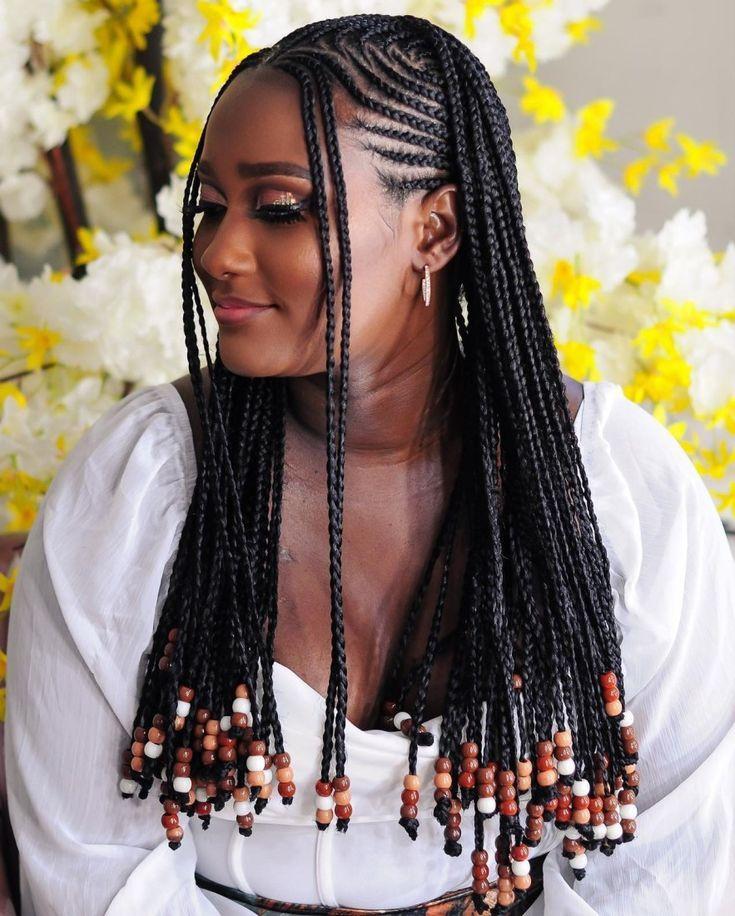
Fulani braids are a type of protective hairstyle (designed to safeguard natural hair) originating from West Africa. Characterized by a central braid running down the middle of the head and side braids that frame the face, the style is traditionally adorned with beads or shells (such as cowrie shells) and takes its name from the Fulani people of West Africa.
Unlike box braids, knotless braids, or tribal braids—which involve sectioning hair into uniform squares or triangles for braiding—the structure of Fulani braids relies on a distinctive parting design.
This typically centers on a main braid running down the middle of the head, complemented by thinner braids extending toward the temples and hairline. It is this structural layout, rather than specific materials or lengths, that gives the hairstyle its signature "Fulani" look.
Key Characteristics of Fulani Braids
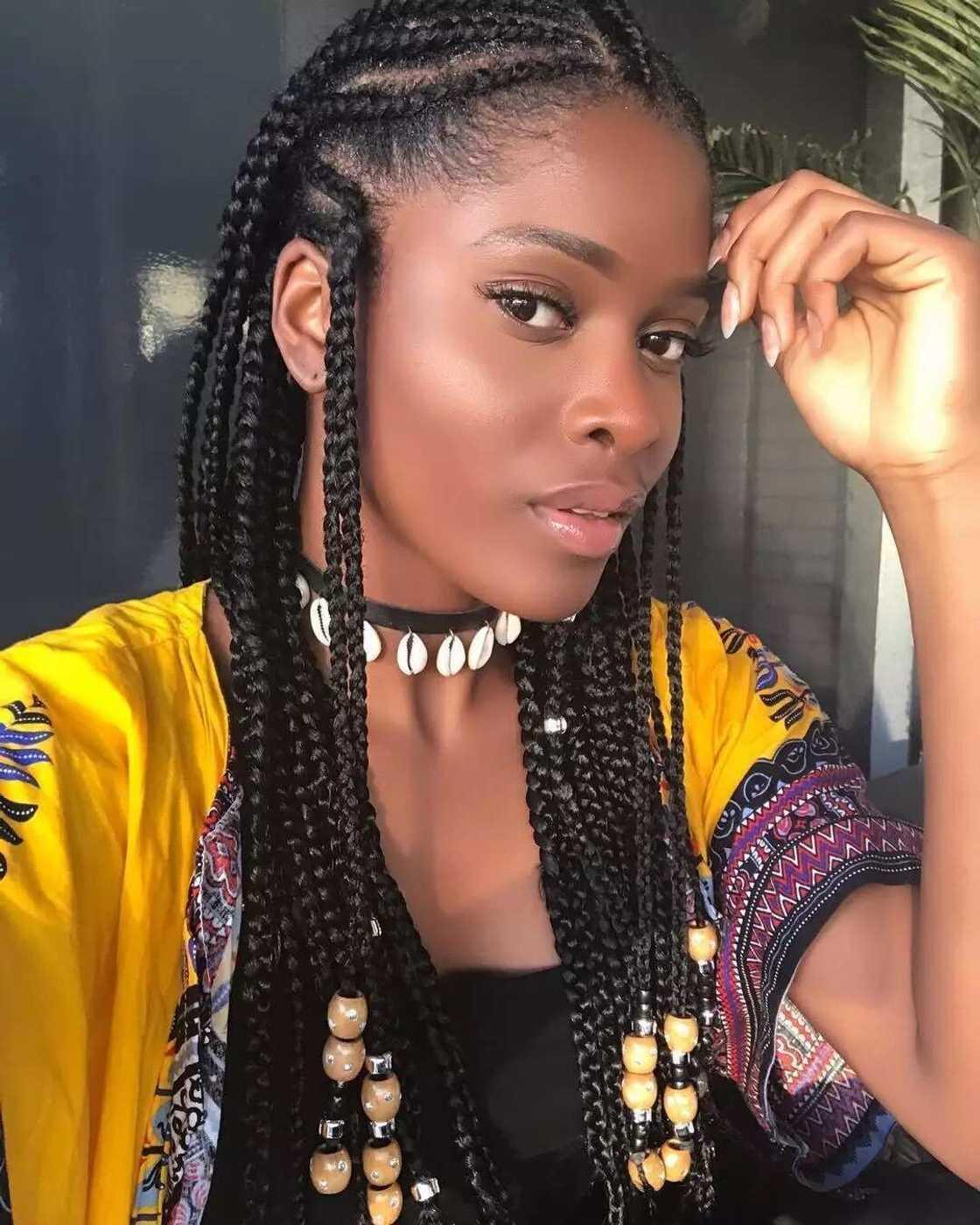
- A central cornrow running down the middle of the head, created using the "stitch feed-in" technique.
- Cornrows braided in a direction towards the face.
- Two separate braids hanging down towards the front on either side of the head.
- Knotless box braids at the back of the head.
- Embellishments such as decorative beads, cuffs, or rings—a tribute to the Fulani tradition of adorning the ends of braids with gemstones, beads, or coins.
- Intricate braiding patterns customized to personal preference.
Today, modern Fulani braids have evolved into countless variations, allowing individuals to express their unique style while honoring the style's rich cultural heritage.
Why are Fulani Braids So Popular?
Protect Natural Hair
Fulani braids help protect natural hair by minimizing the pulling and tugging associated with daily grooming and styling, thereby reducing the risk of breakage and helping to retain hair length.
Versatile Styling
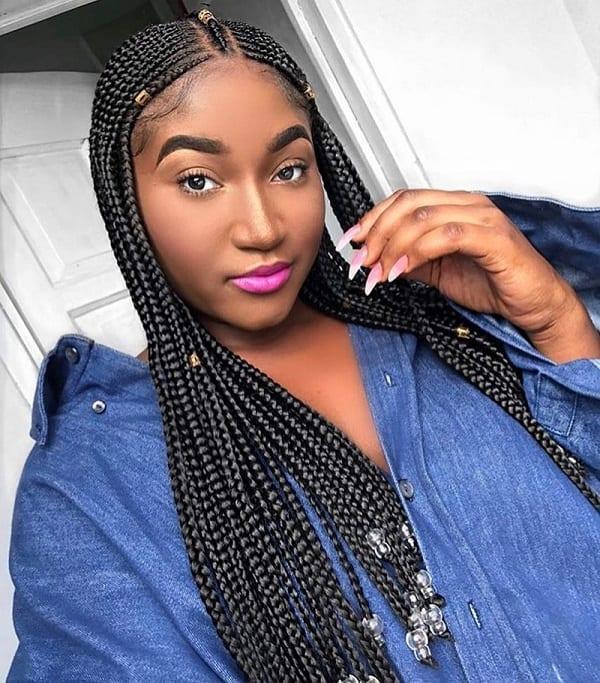
Fulani braid styles can be customized to personal preference, including the thickness, length, and color of the braids, as well as the choice of accessories.
Low Maintenance
Once installed, Fulani braids require little daily upkeep, making them ideal for people with busy lifestyles.
Long Lasting
With proper care, Fulani braid styles can typically last anywhere from four to eight weeks.
Stylish Look
The combination of neat braiding patterns and decorative elements creates a stylish aesthetic suitable for both casual and formal occasions.
Step-By-Step Guide: How to Create Fulani Braids
Step 1: Preparing Your Hair for Braiding
Before you begin, prepare your natural hair for Fulani braids. For the best results, it is recommended to take the following steps in the days leading up to your appointment or DIY session:
- Cleanse and nourish your hair using a moisturizing shampoo and conditioner.
- Thoroughly detangle your hair with a wide-tooth comb or a detangling brush.
- Apply a nourishing leave-in conditioner or hair cream.
- Blow-dry or stretch your hair to minimize tangles and ensure a smoother braiding process.
- Keeping your hair well-moisturized helps reduce tension and prevent breakage, allowing the braids to lie flat and sit neatly against the scalp.
- Additionally, gather all necessary supplies the day before: pre-stretched braiding hair, your preferred styling products, hair clips, edge styling tools, and any beads or accessories.
- On the day of braiding, ensure your hair is clean, dry, moisturized, and ready to be braided.
Step 2: Sectioning and Parting
The parting style determines the pattern of the Fulani braids. Therefore, take the time to ensure your parting lines are neat and symmetrical.
Most Fulani styles incorporate the following elements:
- A straight center part extending from the front hairline to the nape of the neck
- Cornrows extending diagonally outward from the center part toward the sides
- Free-hanging braids at the back of the head
Use a rat-tail comb to create the following sections:
- A center part
- Several horizontal or curved parting lines on each side
- Apply a small amount of hair gel along the parting lines to help keep them crisp and defined.
Step 3: Braid the Signature Center Braid
The center cornrow serves as the foundation for the Fulani style.
Here are the specific steps:
- Start at the forehead and braid towards the back of the head.
- Keep the braid close to the scalp.
- Gradually add strands of hair if you wish to increase the braid's thickness.
- Ensure the tension is moderate; avoid braiding too tightly.
- This center braid creates a sense of harmony and symmetry, so precision is crucial.
Step 4: Begin Feed-in Braiding on Both Sides
The feed-in braiding technique adds volume without making the roots look too bulky.
Here is how to do it:
- Take a small strand of braiding hair and gradually weave it in with your natural hair.
- Continue braiding downwards, adding small amounts of the extension hair in layers as you go.
- Ensure the braids on both sides are symmetrical in thickness and length.
- Arrange the braids evenly, extending from the center of the crown toward the hairline.
This step creates the signature silhouette of Fulani braids.
Step 5: Braid Towards the Back of the Head
When the cornrows converge at the crown or the middle of the scalp, transition them into loose, hanging braids. This is the moment to showcase your personal style.
You can choose:
- Straight, hanging braids
- Braids with wavy ends
- Thick, single braids
- Medium or thin braids
Step 6: Setting and Finishing Touches
Once the braids are complete:
- Apply setting mousse or foam to the scalp and braids.
- Gently wrap the hair with a satin scarf and let it sit for 15–20 minutes.
- If necessary, use a cool-air setting to dry the hair.
This helps eliminate frizz and smooth down flyaways, giving the braids a polished, neat appearance.
Finally, you can embellish the braids with beads to showcase your unique style with the Fulani braids.
How to Maintain Fulani Braids?
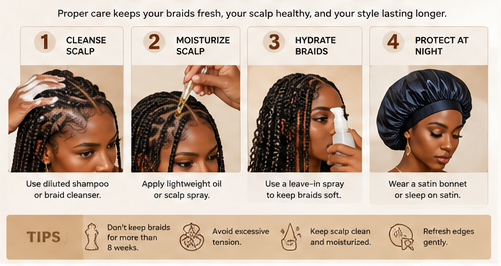
Consistent daily care is essential to keep your Fulani braids fresh and healthy. Follow these tips to help your style last longer.
Keep the Scalp Clean and Moisturized
Regularly cleanse your scalp with diluted shampoo or a leave-in dry shampoo foam to prevent dirt buildup. Apply a lightweight hair oil (such as jojoba or argan oil) or a scalp spray a few times a week to keep the scalp hydrated.
Protect Your Hair While Sleeping
Wrap your hair every night using a silk or satin scarf or a bonnet. Wrapping your hair prevents moisture loss, friction, and frizz, helping the style last longer. It also prevents your pillow—often made of highly absorbent materials like down or cotton—from wicking moisture away from your hair.
Avoid Excessive Tension
If your scalp feels tight or painful after braiding, inform your stylist immediately. Excessive pulling can lead to hair loss and traction alopecia.
Groom Your Edges
Use edge control products sparingly to maintain a neat look without putting undue stress on your hairline.
Fulani Braids vs. Other Braided Hairstyles
| Feature | Fulani Braids | Box Braids | Knotless Braids | Cornrows | Goddess Braids |
| Origin | Inspired by the Fulani people of West Africa | Traditional African protective style | Modern variation of box braids with a feed-in technique | Traditional African braiding technique | Modern variation of braided styles |
| Signature Look | Center part, front-to-back cornrows, side braids, beads | Individual braids sectioned into square parts | Natural-looking braids that start with your own hair and gradually add extensions | Hair braided close to the scalp in straight or curved rows | Braids combined with loose curly strands |
| Installation Time | 4–8 hours | 4–10 hours | 5–9 hours | 1–4 hours | 5–9 hours |
| Hair Added | Usually braiding hair extensions | Usually braiding hair extensions | Extensions gradually fed into the braid | Optional | Braiding hair plus curly extensions |
| Best For | A culturally rich style with beads and unique braid patterns | The longest-lasting classic protective style | A lightweight, natural-looking style with less tension | A sleek and sporty protective hairstyle | A trendy boho look with curls and movement |
Nadula Fulani Braids Half Wig
Nadula's newly upgraded half wig—which we call the "Fulani braids half wig"—is a pre-braided edge style that is beginner-friendly and easy to wear. It requires no glue and blends seamlessly with your natural hair, making it ideal for styles that leave some of your own hair exposed.
The pre-braided design at the front eliminates the need for complex blending techniques, while the Fulani braids style along the hairline adds a trendy touch and gives the wig a unique, stylish flair.
FAQs About Fulani BraidsHow Long Do Fulani Braids Last?
With proper care and protective wrapping, Fulani braids can last for 4 to 6 weeks, depending on hair type, lifestyle, and maintenance frequency.
How Long Does It Take to Get Fulani Braids?
Be prepared to spend a significant amount of time in the salon! Depending on the length and intricacy of the style, the entire process can take anywhere from four to six hours.
What's The Difference Between Fulani Braids and Tribal Braids?
Fulani braids are a type of tribal braid, named after the Fulani people. "Tribal braids" is a broader umbrella term that encompasses Fulani-style braiding as well as other traditional African braiding styles.
Do Fulani Braids Damage Your Natural Hair?
No. When installed correctly and maintained with regular moisturizing treatments, this style can actually help protect your hair and promote growth.
How Long Should I Wait Between Fulani Braid Sessions?
Your hair needs a break between sessions to prevent hair loss and allow for deep conditioning. Most experts recommend letting your hair rest for two to three weeks before getting your next set of braids.
Do I Need Hair Extensions or a Wig For Fulani Braids?
While extensions are often used to add length and volume, Fulani braids can certainly be created using only your natural hair. Alternatively, if you want more styling versatility, you can add extensions for volume or incorporate a wig, such as a half-wig, to achieve a more natural and unique look.